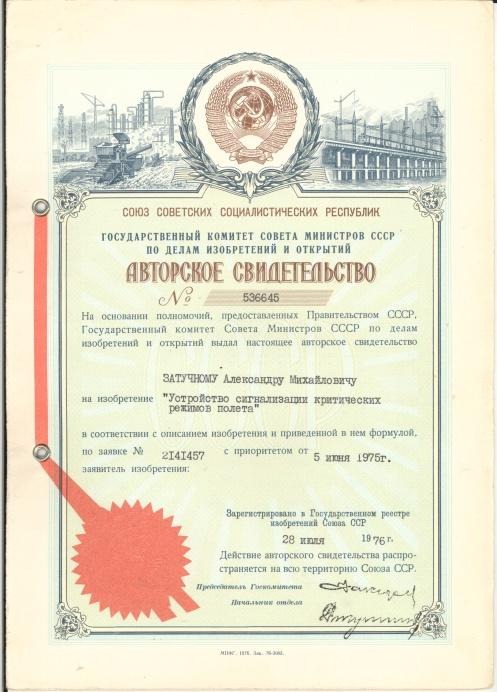
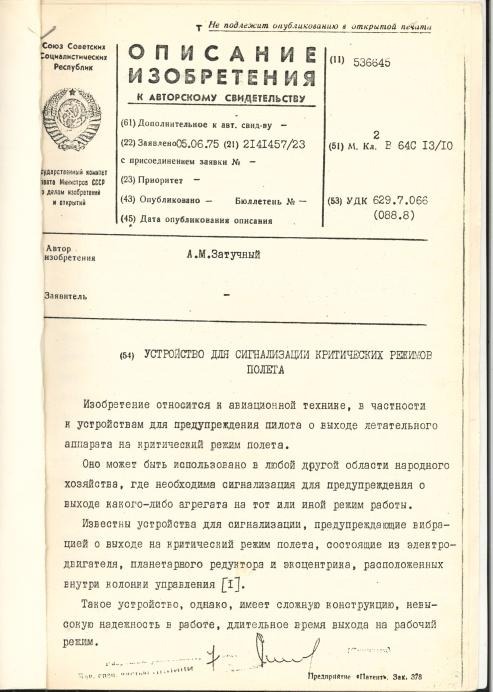
Flight Critical Modes Warning Device
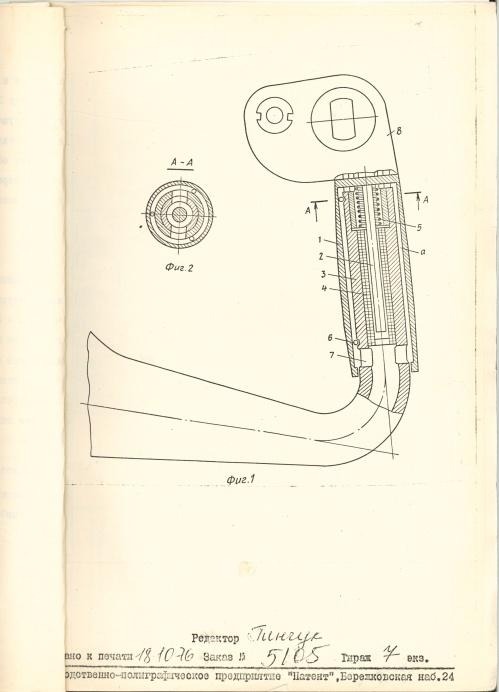
RoboticsThe device according to Author's Certificate No. 536645 provides the aircraft pilot with a warning when the aircraft enters a critical flight mode by shaking (vibrating) the control yoke handle (the "stick shaker" mode).
- Innovator(s)
- Zatuchny Alexander Mikhailovich
- Country
- Russia
- Exhibition zone
- Product Arena
- Technology Readiness Level
- TRL 5 of 9
- Edition
- INEX 2026
About this innovation
The device according to Author's Certificate No. 536645 provides the aircraft pilot with a warning when the aircraft enters a critical flight mode by shaking (vibrating) the control yoke handle (the "stick shaker" mode).
To increase operational reliability, the device is installed in each control yoke handle (aircraft control lever). It is designed as a solenoid, the core of which is rigidly connected to the movable body of the handle, while the solenoid windings are fixed in the stationary part of the handle. The solenoid windings are connected to the critical flight modes sensor.
When entering critical flight modes, the critical flight modes sensor sends pulsed voltage signals of a specific magnitude, duty cycle, and frequency to the solenoid coil winding. The solenoid core is then pulled into the stationary part of the handle, drawing the movable handle body with it and compressing the spring.
When the voltage is removed from the solenoid coil winding, the spring expands. It returns the movable handle body along with the solenoid core to its initial position.
The actuation of the solenoid core is carried out at the frequency of the signal supplied from the critical flight modes sensor. Thus, the resulting vibration (the "stick shaker" mode) of the movable handle body is transmitted to the pilot's hands, effectively warning them that the aircraft is entering a critical flight mode.
Stick Shaker Mode: MC-21 Control Stick Can Warn the Pilot of Danger via Vibration
Shaker mode: the control stick of the MS‑21 aircraft, with its shaking, can warn the pilot of a danger.
SOCIETY December 4, 2019 10:39
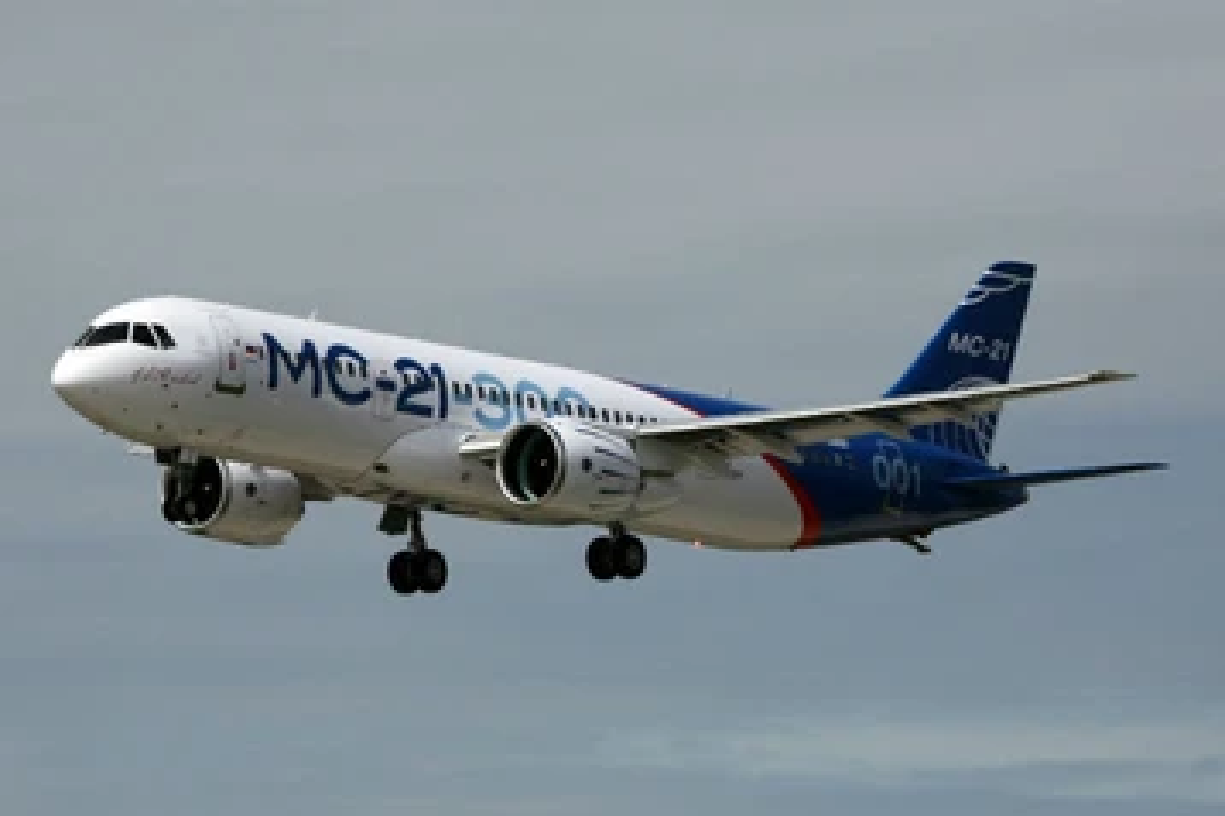
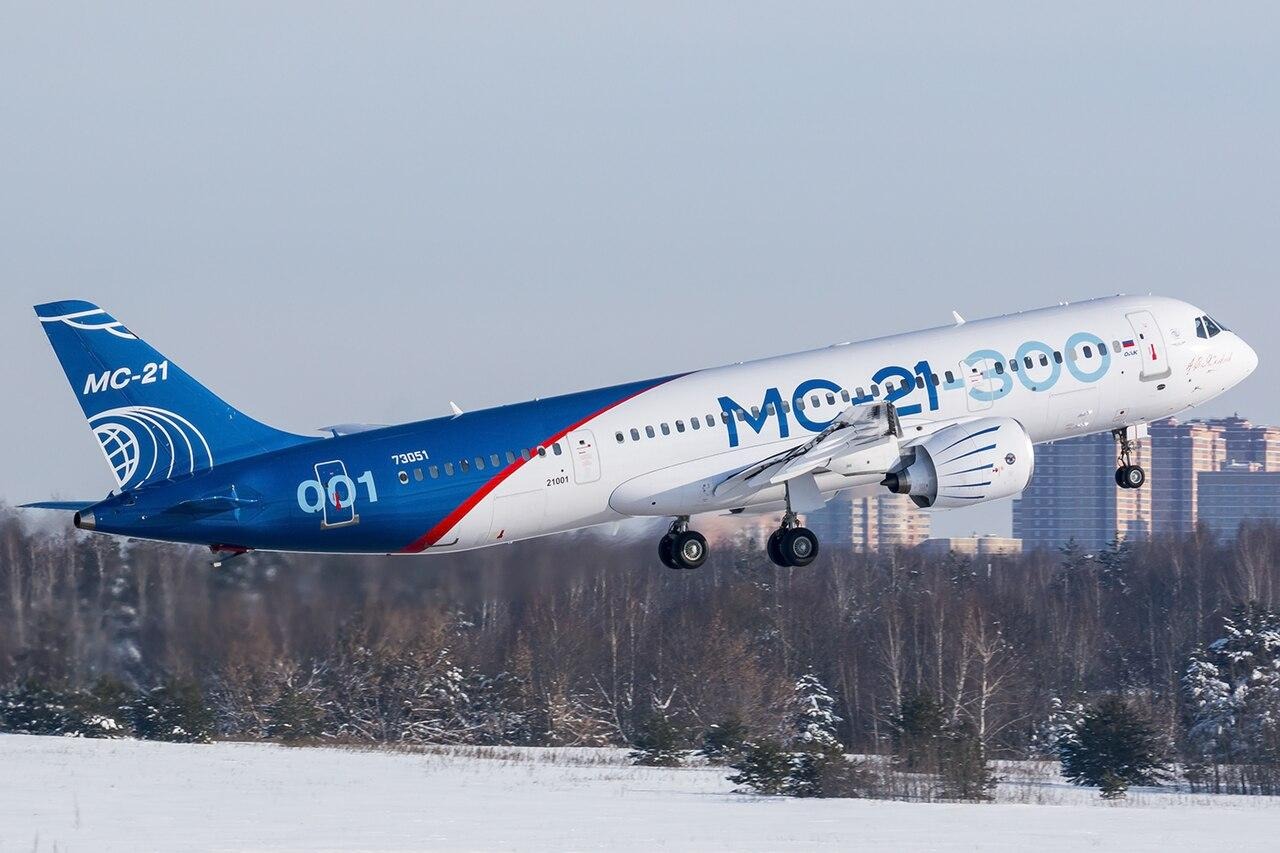
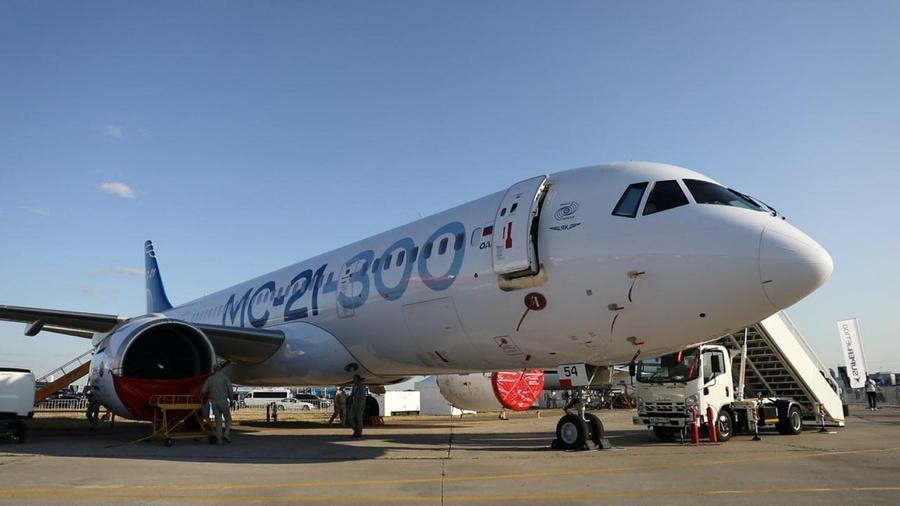
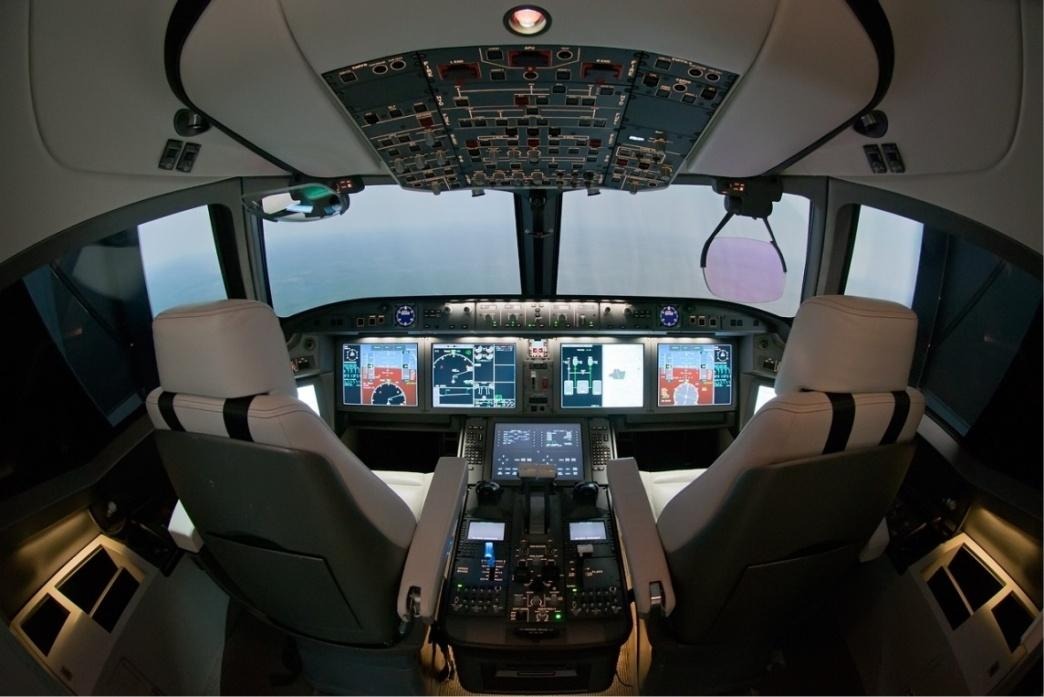
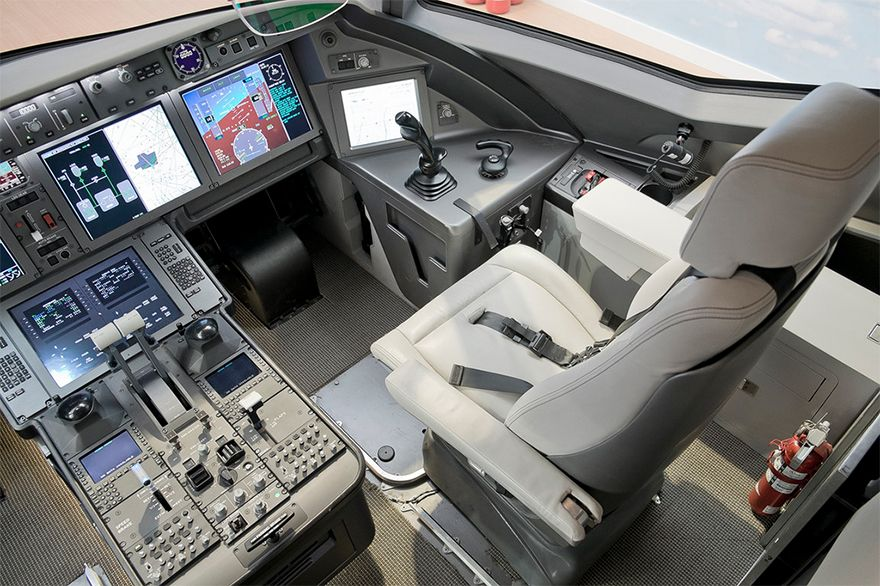
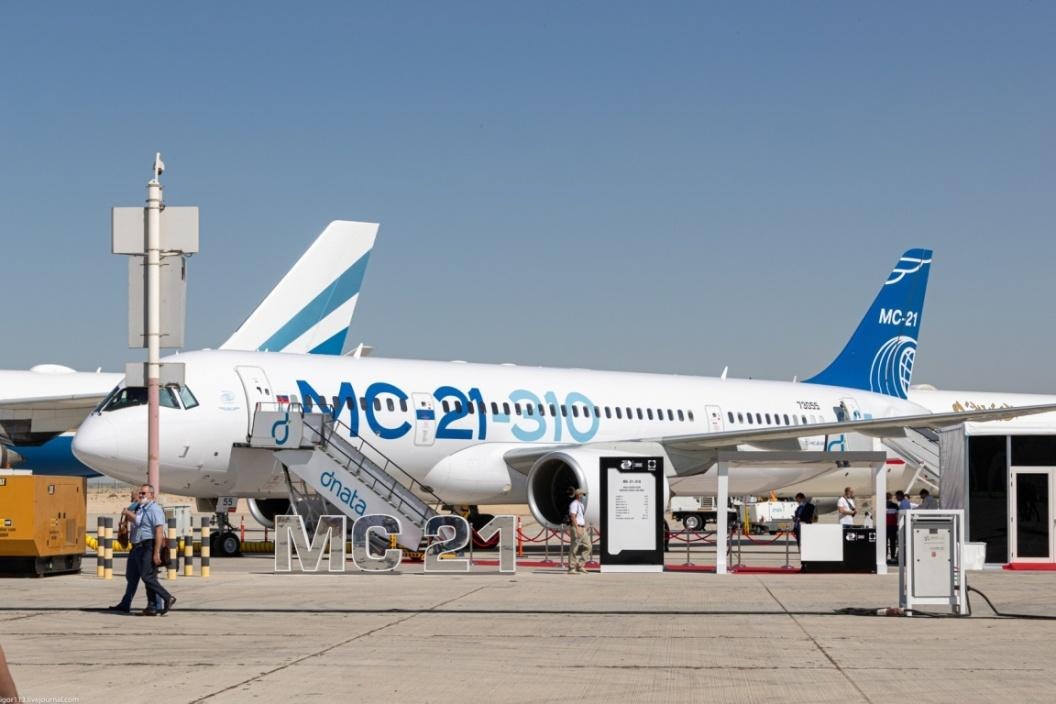
The MC‑21 is the first passenger aircraft to feature linked side handles.
Andrey SINKOV
The Irkut Corporation, which assembles the new Russian MC-21-300 aircraft at the Irkutsk Aviation Plant, continues to introduce future passengers of the airliner to its design. Recall that earlier, on the corporation's official YouTube channel, they showed what the aircraft cabin and cockpit look like, and now it is time to see and learn the details of how the modern control stick works in the MC-21.
"Specific modes are implemented on this stick," says Roman Taskaev, Deputy General Director for Flight Testing at JSC "A.S. Yakovlev Design Bureau." "For example, the stick shaker mode, where the stick warns the pilot by shaking that the aircraft has approached critical flight modes. Tactile perception adds another feedback loop and helps the pilot maintain safety. Because the captain's and co-pilot's sticks move synchronously, the reaction to correcting any errors is faster and of higher quality. Will it be easy for a pilot who has flown with a control yoke all his life to adapt to sticks? I think there will be no issues here."
Recall that the first prototype MC-21 made its maiden flight in Irkutsk on May 28, 2017. And in September 2018, the airliner was tested by pilots from the European Aviation Safety Agency (EASA). They tested takeoff, approach, and landing using landing systems. In August of this year, the MC-21 was first presented publicly during demonstration flights at MAKS-2019.
Currently, three prototype MC-21-300 aircraft are undergoing flight testing. At the end of November 2019, the assembly shop of the Irkutsk Aviation Plant completed diagnostics of the systems of the fourth airliner, which has already been transferred to the flight test division.
The comprehensive program for the development of the Russian aviation transport industry until 2030 plans for the Irkut Corporation to produce 270 MC-21 aircraft.
In November 2022, the company "Spectrum-Avia" in Ulyanovsk painted an MC-21-300 aircraft with tail number 73054 in the colors of the "Rossiya" airline. This is one of six flying MC-21 examples. In total, the Aeroflot Group, which includes Rossiya, is to receive 210 MC-21-310 aircraft by 2030 out of 270 ordered from Irkut under the comprehensive program for the development of the Russian aviation transport industry until 2030. The Russian government adopted this program on June 25, 2022.
D.V. Manturov stated that serial production of the MC-21 aircraft will be launched in 2025.
POLITICS EXCLUSIVE KP.RU
“This handle implements certain modes,” says Roman Taskaev, deputy general director for flight testing at JSC “A. S. Yakovlev Design Bureau.” “For example, the shaker mode, when the handle’s shaking indicates that the aircraft is approaching critical flight regimes. And the tactile feedback adds another layer of feedback and helps the pilot maintain safety.” Thanks to the fact that the commander’s and co‑pilot’s control handles move synchronously, the response to correcting any errors is faster and more effective. Is it easy for a pilot who has spent their entire life at the controls to switch to the control handles? I think there will be no questions here.
Read on WWW.IRK.KP.RU: https://www.irk.kp.ru/daily/27063/4131931/
Media reports:
The Irkut Corporation published a video about controlling the MC‑21.
December 4, 2019.
The Irkut Corporation published a new video on its YouTube channel about the control stick of the MC‑21 aircraft, which is assembled in Irkutsk..
- The active side stick makes control comfortable. The sticks also have a “shaker” mode. If the aircraft approaches critical levels, the stick starts to shake. “This helps ensure safety,” said Roman Taskaev, deputy general director for flight testing at the A. S. Yakovlev Design Bureau.
In a new video from “Irkut,” they talked about the control stick on the MC‑21 aircraft.
December 4, 2019, 4:22
© GTRK “Irkutsk” / Gleb Nechaev, Yulia Grozdova
The MC‑21 became the first passenger aircraft to be equipped with linked side sticks..
As honored test pilot Roman Taskaev explains in the video, this type of control allows the pilot to interact with other displays in a more comfortable posture for piloting. Another advantage for training second pilots is that the backup control stick replicates all the movements of the main one.
— The stick has separate modes. For example, the shaker mode, when the stick’s shaking indicates that the aircraft is approaching critical flight regimes. Active perception adds another form of feedback and helps me maintain safety,” says Roman Taskaev, deputy general director for flight testing at JSC “OKB named after A. S. Yakovlev”.
The Voice of Russia and Novorossiya | News
One of the “features” of the MC‑21 is the active side control stick!
The control yokes on large aircraft originally appeared because they required considerable effort to operate, and it’s more convenient to do this with two hands — and it can even be done by two pilots at once using two control yokes. Although there were some exotic designs where there was only one yoke, but it could “switch” from one pilot to the other.
Now the question "steering wheel or handle?" is more likely to be deciphered as "Boeing or Airbus?"
Of course, on modern aircraft, where, due to the use of electro-remote control systems (EMF, "fly-by-wire"), there is no longer any mechanical wiring between the controls in the cockpit and the rudders on the aerodynamic surfaces, there is no need for steering wheels. The only advantage of the controls was the "feedback" between the pilots, when both pilots "physically" felt what command they were giving the aircraft together.
The handles are on SuperJets - although this Russian project was advised by the "conservative" Boeing, but a survey of customers showed their preference for side handles, as on Airbus.
The handles on the Airbus and Superjet are not "active", they resemble computer joysticks without feedback between them - that is, the actions of the control stick of one pilot do not affect the control stick of the other pilot. By default, the deviations of the two handles are summed up, so you can slightly adjust the actions of the other.
However, in a difficult situation, when the actions of the pilots can be completely opposite, these opposites can give a "near-zero" command to control the aircraft, which led to disasters. Of course, there is a "take control" button (this is the only red button on the side handle), but in a stressful situation they forget about it.
On the MC-21, the handle is active, "repeating" the actions of another pilot - and this facilitates the interaction of pilots. In addition, it has an option to "warn" by vibration of approaching dangerous modes - an analog of a "shaker". This, of course, should have a positive impact on flight safety.
Active control knobs (not only the side ones, but also the central ones, between the pilot's legs) have a future in combat aviation, where two-seat aircraft, especially with pilots landing one after another, and even at different heights, will not need mechanical wiring to maintain tactile communication between pilots. Especially since all modern combat aircraft use an EDCS.
P.S. One of the authors @AviaComments managed to try this control stick on the MS‑21 test bench, and although it seems unusual at first, after just a couple of minutes of piloting, this difference is no longer noticeable — the behavior of the control stick with feedback turns out to be natural, even when two pilots are simultaneously controlling the aircraft.
#VoiceOfRussia
- The active side handle makes control comfortable. The handles also feature a “shaker” mode. If the aircraft approaches critical thresholds, the handle starts shaking. This helps ensure safety, said Roman Taskaev, Deputy General Director for Flight Testing at JSC “A.S. Yakovlev Design Bureau”.

Википедия
Komsomolskaya Pravda
“Komsomolskaya Pravda” is a Soviet and Russian daily socio-political newspaper, as well as an online publication, a radio station (since 2009), and a television channel (2010–2014). They are part of the Komsomolskaya Pravda publishing house.
Circulation
The circulation of the publication in Russia and the CIS countries in 2008 amounted to 35 million copies.
Abroad, the newspaper has a circulation of one million copies and is published in 48 countries around the world. In Europe, it is on par with other Russian‑language publications such as “AiF”, “Novoe Russkoe Slovo”, and “Izvestia”[29].
As of 2022, the daily circulation was 1.5 million copies, and the weekly circulation was 1 million copies.
One of the "chips" of the MS-21 is an active side control knob
Test pilot of the OKB named after Oleg Mutovin, Yakovleva, explained what an "active side control stick" is and how it makes the MC-21 aircraft safer: https://aviation21.ru/mnenie-aktivnaya-bokovaya-ruchka-upravleniya-ms-21-delaet samolyot-bezopasnee/
The control yokes on large aircraft originally appeared because they required considerable effort to operate, and it was more convenient to do this with two hands, and it could also be done by two pilots at once using two control yokes. Although there were some exotic designs where there was only one control yoke, but it could be “switched” from one pilot to another.
Now, the question “steering wheel or control stick?” can be more accurately interpreted as “Boeing or Airbus?”
Of course, on modern aircraft, where the use of fly‑by‑wire systems (FBW, “fly‑by‑wire”) eliminates the need for mechanical linkage between the controls in the cockpit and the control surfaces on the aerodynamic surfaces, there is no longer any need for steering wheels. The only advantage of steering wheels was the “feedback” between pilots, when both pilots “physically” felt what command they were giving to the aircraft together.
The control handles are located on SuperJets — although this Russian project advised the “conservative” Boeing, customer surveys showed their preference for side control handles, like those on Airbus..
The control handles on Airbus and SuperJets are not “active”; they resemble computer joysticks without feedback between them — that is, the actions of one pilot’s control handle do not affect the control handle of the other pilot. By default, the deflections of the two handles are summed — this allows for a slight adjustment of the other’s actions. However, in a complex situation, when the pilots’ actions may be completely opposite, these opposites can result in a “near‑zero” command to control the aircraft, which has led to disasters. Of course, there is a “take control” button (this is the only red button on the side stick), but in a stressful situation, people forget about it.
On the MC‑21, the stick is active and “repeats” the actions of the other pilot — and this facilitates interaction between the pilots. In addition, it has an option to “warn” with vibration when approaching dangerous modes. This, of course, should have a positive impact on flight safety.
Active control sticks (not only the side ones, but also the central ones, between the pilot’s legs) have a future in combat aviation as well, where in two‑seat aircraft — especially those with pilots sitting one behind the other, and at different heights — mechanical linkage will no longer be needed to maintain tactile contact between the pilots. Moreover, all modern combat aircraft use EMF.
P.S. One of the authors of @AviaComments managed to try this pen on the MS-21 stand, and although it seems unusual at the very first moment, but after a couple of minutes of piloting this difference is not noticeable, the behavior of the pen with feedback turns out to be natural even when piloting together.